
Personal Protection At Camp: Shotgun or Handgun
For a retired person/ veteran at a campsite, the choice between a shotgun and a handgun for personal protection depends primarily on environment,
physical capability and comfort level. Both have distinct advantages and drawbacks in an outdoor setting.
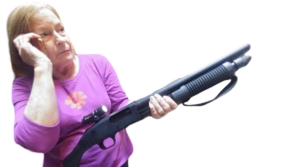
Shotgun: Best for Wildlife and Home Defense (Based on your situation). Shotguns (specifically 12-gauge or 20-gauge pump action or semi-automatic models) are traditionally favored for camping in areas with large wildlife like bears or mountain lions.
Pros:
Stopping Power Against Wildlife: If you are camping in bear, cougar or wild boar country, a shotgun loaded with slugs or heavy buckshot is far more effective at stopping a large animal than almost any standard handgun. A shotgun also allows 3 points of contact (shoulder, cheek and hands), making it much easier to hit your target under high stress engagement situations compared to a handgun.
Cons:
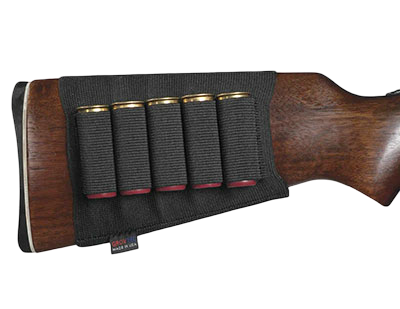
Size and Weight: Shotguns are heavy, especially after I added the Elastic Buttstock Carrier. They’re cumbersome to carry around a campsite or store inside a small tent or RV. A 12-gauge shotgun has significant recoil, which can be a little more punishing on the joints of older retired veterans (like me). (A 20-gauge reduces this significantly). Keeping a shotgun accessible yet secure inside a campsite requires more effort than a holstered handgun. A shotgun will certainly solve a problem, if you get to it in time.
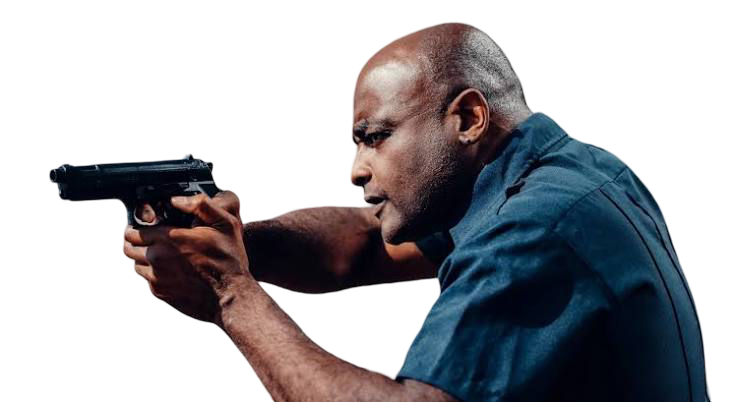
The Handgun: (Best for Mobility, Concealment and 2 Legged Threats). Handguns (semi-automatic pistols or revolvers) offer maximum portability and are generally preferred if your primary concern is personal defense against humans or venomous snakes. I don’t usually go to campsites with bears walking around, so I prefer a handgun while I’m camping. Especially when I’m with my wife, we do more glamping than camping.
A handgun can be worn in a hip holster or shoulder holster at all times while walking around the campsite, gathering firewood or hiking.