

CCW IN A PURSE
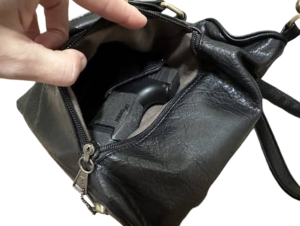
Are There Drawbacks For Women Carrying Concealed Weapons In Their Purse At The Campsite?
Carrying a concealed weapon in a purse while camping is a popular method among women for self-defense. Firearm instructors, security experts, and law enforcement generally consider it to be one of the least optimal methods of concealed carry. Here are the primary drawbacks and risks associated with retired veterans carrying a concealed weapon in a purse.
1. Accessibility and Speed
Slower Draw Time: To access the firearm, you must first locate the purse, unzip or unfasten it, bypass any clutter (keys, wallets, makeup), and then draw the weapon. In a sudden, high-stress attack, seconds matter, and this multi-step process is significantly slower than drawing from a holster attached to the body. If you’re grabbed or fighting off an attacker, your hands may not be free to access your purse, or you may be physically separated from it.
2. Risk of Separation (The “Off-Body” Problem)
Easily Separated from the Owner: A purse is a distinct, easily grab-able item. It can be snatched, stolen, or left behind. If someone steals your purse, they have not only your valuables but also your firearm.
Setting the Purse Down: Women frequently set their purses down in shopping carts, on restaurant tables, in public restrooms, or on the floor next to them. If the purse is left unattended even for a few seconds, it creates a severe safety hazard, especially around children.
3. Safety Hazards (The “Black Hole” Effect)
Lack of Trigger Protection: Standard purses contain many loose items. If a firearm is carried loose in a purse without a dedicated, rigid holster covering the trigger guard, items like keys, pens, or drawstrings can slip inside the trigger guard and cause an accidental discharge.
Access by Children: If a mother sets her purse down, a curious child might reach inside. Unlike a holster worn on the body (which requires a conscious effort to access), an ordinary handbag is easily accessible to children.
4. Retention and Theft
Target for Criminals: Criminals specifically target purses for theft. A purse snatcher may not know a firearm is inside, but the theft inadvertently arms a criminal with your weapon. If an attacker attempts to steal your purse and you are holding onto the strap because your gun is inside, you may escalate a simple property crime into a violent physical struggle.
5. Situational Disadvantages
Two-Handed Operation: Most purse-carry methods require two hands—one to hold the purse open and stable, and the other to draw the firearm. In a real attack, one of your hands may be needed to push the attacker away, block strikes, or protect your head.
Inconsistent Placement: If veterans switch between different purses, they change where the firearm is located, increasing the mental load of remembering where your self-defense tool is in an emergency. If a retired veteran chooses to carry in a purse while camping despite the drawbacks, experts generally recommend that safety measures be used.
Dedicated Concealed Carry Purses: These feature a separate, locked, or Velcro-secured compartment specifically designed for the firearm, keeping it away from the main pocket’s clutter.
Trigger Guard Holsters: In a dedicated pocket, a rigid holster that completely covers the trigger guard is essential to prevent accidental discharges.
Cross-Body Straps: Using a slash resistant, cross-body strap makes it much harder for a thief to snatch the purse.
Never Use Off-Body Storage In Public. Treat the purse like a holster, meaning it’s physically attached to your body or within your immediate physical control at all times. Some additional CCW methods.