

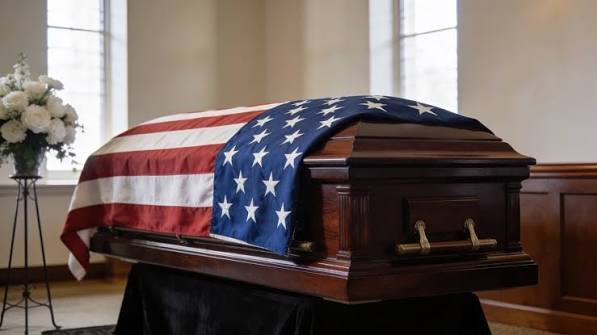
GOLD STAR FAMILY LOSS
The short answer is no, they never truly “get over” it. Instead, they learn to live around the grief, carrying it with them for the rest of their lives. For a Gold Star family member, the loss of a child in combat is a profound, life-altering trauma. Grief experts often describe it as an amputation of a part of oneself. You don’t heal from an amputation, you simply learn how to navigate the world without that limb. Gold Star families adapt to a new and permanently altered reality. Here’s a closer look at what the journey of Gold Star family members of The Fallen, actually looks like in my opinion.
1. Grief Has No Expiration Date: Society often expects people to “move on” after a certain amount of time, but for a parent who has lost a child, grief is lifelong. It changes shape over the years, but it never disappears. Anniversaries of the death, birthdays, holidays and even seemingly random triggers like the smell of a certain food, a song or meeting someone of the same age can instantly bring the raw pain back to the surface.
2. Moving Forward, Not “Moving On.”: Most Gold Star parents reject the idea of “getting over it” or “moving on,” because doing so feels like leaving their child behind. Instead, they talk about moving forward. They build a new normal that incorporates the memory of their child. They find ways to honor their child’s legacy through foundations, scholarships, volunteer work or simply by sharing their stories.
3. The Lifelong Contrast of Pride and Pain: Gold Star families live in a complex emotional space. They often feel an immense, rightful sense of pride in their child’s service, courage and ultimate sacrifice for their country. However, that pride exists side-by-side with a devastating, agonizing void. They can be fiercely proud of how their child lived and served, while simultaneously heartbroken by how their life was cut short.
4. The Transformation of the Pain: While the pain of the loss never goes away, the way it’s experienced (sometimes) evolves. In the early years, the grief is usually all consuming, chaotic and paralyzing. Day to day survival is the primary goal. In later years, over time, the acute, suffocating agony often shifts into a dull, persistent ache. Parents learn to weave the grief into the fabric of their daily lives. They find moments of joy, laughter and maybe even a little peace again. The reality never actually leaves and those moments always exist alongside the quiet awareness of the empty seat at the table.
Ultimately, Gold Star families do not recover from the loss of a child lost in battle. The family survives it, endures it and carry it. Through mutual support groups, peer networks and the deliberate keeping alive of their child’s memory, they find the strength to keep going. They keep going even though the wound never fully closes. I lost a family member in battle too. I pay tribute in The No Judgement Campsite, that is never ending.